Learn how different water heating systems—tank, tankless, heat pump, and solar—compare in efficiency, performance, and long-term savings.
Understand key buying factors like fuel type, household demand, efficiency ratings, and installation considerations for smarter, cost-effective decisions.
Reliance Heath Water Heater Rentals offers expert guidance, professional installation, and reliable service for lasting home comfort and energy savings.
There’s nothing quite like stepping into a perfectly warm shower, the kind that melts away stress and starts your day right. But that feeling can turn on you in seconds when the water runs cold. Hot water is one of those modern comforts we take for granted… until it’s gone.
For most homeowners, the water heater stays out of sight and out of mind, tucked in a basement corner or garage, until the day it fails. Then comes the scramble: no hot water, a possible leak, and a rush to replace it without knowing what’s best.
What many don’t realize is that an aging, inefficient water heater quietly drains money month after month. Every minute it runs below optimal efficiency, you’re paying for wasted energy and comfort you’re not getting.
As professionals who’ve been in thousands of basements and garages, we’ve seen the good, the bad, and the downright inefficient. Choosing a water heater isn’t just about “getting hot water.” It’s one of the most important energy decisions you’ll make for your home.
This guide will break down your options clearly and simply, helping you find the perfect water heating solution for your family’s comfort, efficiency, and budget.
Why Your Water Heater Decision Matters
Most homeowners don’t realize it, but their water heater quietly ranks among the top energy consumers in the house. After heating and cooling, water heating typically accounts for 15–20% of a home’s total energy bill. An outdated or inefficient system underperforms and can waste hundreds of dollars yearly in energy.
Beyond the numbers, your water heater directly impacts your daily comfort. For large families, mornings can feel like a race against the clock, with showers, dishes, and laundry all competing for hot water. The right system provides consistent performance and endless hot water when you need it. The wrong one? It can leave you negotiating “who showers first” every single day.
Then there’s the long game, because replacing a water heater isn’t just a short-term fix. It’s a 10–15-year investment that can dramatically affect your energy costs and environmental impact. New-generation systems, from tankless to heat pump models, don’t just heat water faster; they use less energy and shrink your home’s carbon footprint. And when it comes time to sell, energy-efficient water heating is an attractive feature for buyers looking for sustainability and lower utility costs.
At the heart of it, your choice isn’t only about hot water, it’s about comfort, savings, and responsibility. As we like to say, “We don’t just sell boxes; we provide long-term comfort and efficiency. We believe an educated customer is our best customer.”
A Pro’s Detailed Breakdown
Choosing the right water heater isn’t just about price or brand; it’s about balancing efficiency, performance, and long-term value. Below, we’ll unpack the pros and cons of each major type, with insights straight from the field.
Conventional Storage Tank Heaters (Gas/Electric)
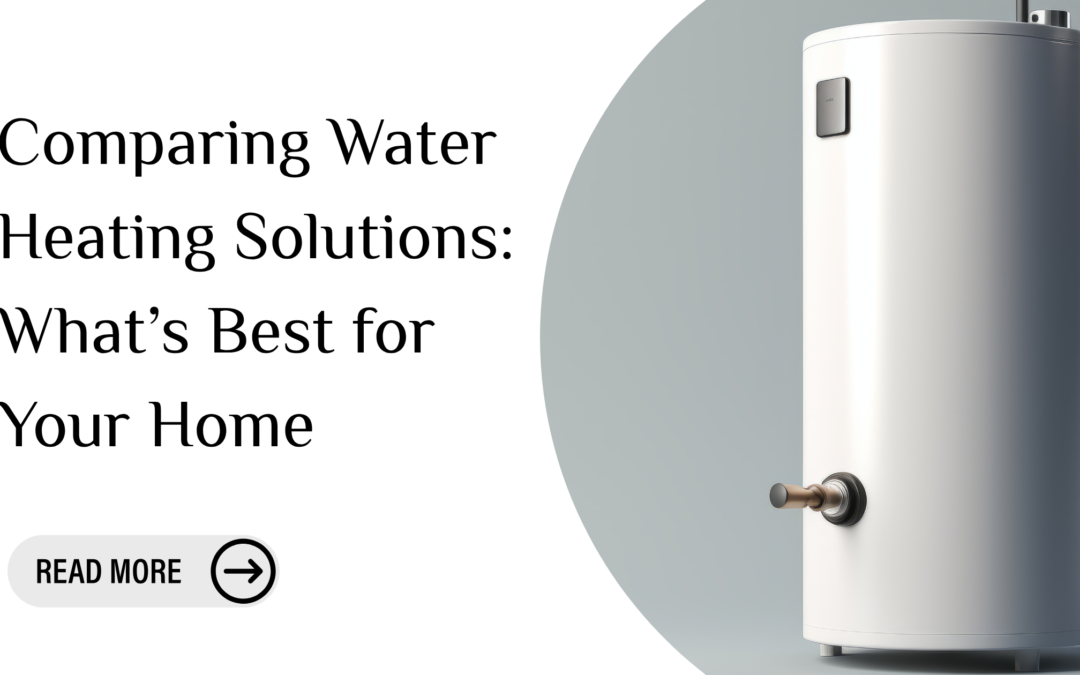
When most people picture a water heater, they imagine a tall, insulated tank quietly keeping 40 to 80 gallons of water hot and ready around the clock. This conventional storage tank model is the simplest and most familiar system on the market, a proven design that’s been the go-to for countless homes for decades. It works by letting water enter the tank, where a gas burner or electric heating element warms it to a set temperature, with insulation helping maintain that heat until you need it for a shower, dishwasher, or laundry. Its biggest advantages are its low upfront cost, simple and reliable technology, and ease of replacement when swapping out an older model. It’s not without drawbacks: it constantly consumes energy to keep water hot (even when not in use), can run out during peak demand, occupies valuable floor space, and typically lasts only 8–12 years. This makes it best suited for budget-conscious homeowners, smaller households, or anyone looking for a quick, like-for-like replacement. As experts often say, “This is the classic, reliable option. We always encourage customers to look at the lifetime cost. The money you save upfront is often spent on higher energy bills over the next decade.”
Tankless (On-Demand) Water Heaters (Gas/Electric)
If the traditional tank is a sprinter, the tankless system is a marathoner—steady, efficient, and built for endurance. Instead of storing hot water, it heats it instantly as it flows through the unit using a high-powered gas burner or electric element. When you turn on a faucet, cold water passes through a heat exchanger and emerges instantly hot, eliminating standby energy loss and ensuring you never run out of hot water. Tankless systems offer endless hot water for back-to-back showers or laundry days, are up to 34% more energy efficient than traditional tanks, last more than 20 years with proper maintenance, and save space with compact, wall-mounted designs. However, they come with a higher initial cost, more complex installation requirements (such as upgraded gas lines or electrical service), and potential flow rate limits during simultaneous high-demand use if not properly sized. They’re ideal for large families, high-demand households, or anyone prioritizing long-term energy savings and space efficiency. We install hundreds of these, as experts say. “I’ll never go back to a tank” is the most common comment. The upfront cost is real, but so are the 20+ years of savings and endless hot water. Sizing is critical here, but it’s not a one-size-fits-all product.
Heat Pump (Hybrid) Water Heaters
When it comes to stretching every energy dollar, heat pump water heaters are the industry’s quiet revolution, combining the reliability of a storage tank with the advanced efficiency of heat transfer technology. Think of it as a refrigerator in reverse—rather than cooling air, it extracts warmth from the surrounding air and transfers it into the water inside the tank. Because it moves heat instead of generating it, this system is remarkably efficient, particularly in mild to warm climates, and most models include a “hybrid” mode that activates electric elements during high-demand periods. Heat pump water heaters are 2–3 times more efficient than standard electric models, offer massive long-term savings with some of the lowest operating costs available, and significantly reduce electricity usage and carbon emissions. On the downside, they come with a higher upfront cost comparable to tankless models, require around 1,000 cubic feet of open space for airflow, have slower recovery times after heavy use, and release cool air, which is great for a warm garage but less ideal for a small conditioned room. They’re best suited for homeowners upgrading from an older electric unit, those with ample installation space, or anyone focused on long-term efficiency and sustainability. For customers with an electric heater in a garage, this is almost always our top recommendation. The energy savings are staggering, and federal or local rebates can often cut the upfront cost dramatically.”
Solar Water Heaters
For homeowners ready to fully embrace renewable energy, solar water heaters offer the ultimate eco-friendly upgrade. Though still a niche choice, they’re incredibly effective when installed under the right conditions. These systems use rooftop solar collectors to capture sunlight and convert it into heat, which is then transferred to water stored in an insulated tank for household use. To maintain consistent performance during cloudy days or periods of high demand, most systems include a backup gas or electric heater. Once installed, solar water heaters boast the lowest operating costs since they rely on free energy from the sun and significantly reduce dependence on fossil fuels while cutting carbon emissions. However, they come with the highest upfront investment due to equipment and installation expenses, their performance depends heavily on local sunlight and climate, and they require a backup system to ensure reliability. As our experts say, “A fantastic green solution for the right home. We partner with solar specialists to create integrated systems. This is a major home infrastructure project, but one with a huge environmental payoff.” Each of these water heating options has its place, and the best choice depends on your home’s design, energy source, and long-term priorities. The key is finding where your household’s needs align with your comfort, efficiency, and sustainability goals, and that’s where professional guidance truly makes a difference.
A Buyer’s Checklist
Before you choose your next water heater, it’s essential to look beyond brand names and prices. Every home has its own needs, and understanding the factors that impact performance, cost, and efficiency will help you make a smart, long-term investment. Here are the five key points every homeowner should discuss with a professional before making the final call.
1. Fuel Type
Start by identifying what’s already available in your home. Natural gas is often the most affordable fuel to operate, while electricity is universally accessible and great for homes without gas lines. Propane is another option for areas without natural gas access. Your existing fuel source will influence both your upfront cost and ongoing operating expenses, so this is your first big decision point.
2. Household Size & Demand (First-Hour Rating)
Your family’s hot water habits determine how much heating power you need. Consider the number of people, bathrooms, and fixtures. Do you have a large soaking tub or back-to-back morning showers? This information helps size your system correctly, whether that means selecting the right tank capacity or the appropriate flow rate (gallons per minute) for a tankless unit.
3. Upfront vs. Lifetime
A cheap heater can be deceptively expensive in the long run. As we tell homeowners, “A $500 heater that costs $400 a year to run is more expensive over ten years than a $1,500 unit that costs $150 annually.” Evaluating both upfront and operating costs ensures you’re saving money over the system’s lifetime—not just on installation day.
4. Understanding Efficiency (UEF)
The Uniform Energy Factor (UEF) measures how efficiently a unit converts energy into hot water; it’s like a car’s MPG rating. The higher the UEF, the lower your utility bills. For example, a standard electric tank might have a UEF around 0.93, while a heat pump model can exceed 3.0, making it over 300% more efficient.
5. Space & Location
Finally, consider where the unit will live. A small utility closet may rule out a bulky heat pump, while homeowners eager to reclaim floor space often prefer a wall-mounted tankless system. The right fit balances comfort, convenience, and practicality for your home’s layout.
The Most Important Choice
We understand the appeal—skipping labor costs and taking the DIY route can sound like a money-saver. But when it comes to water heaters, the risks far outweigh the savings.
Safety
This isn’t a basic plug-and-play appliance. Installation involves gas lines, high-voltage electricity, and pressurized water connections. A single mistake could lead to leaks, fire hazards, or poor ventilation, serious threats to your home and family.
Warranty
Most manufacturers clearly state that warranties are void if the unit isn’t installed by a licensed professional. That means even one misstep could cost you full replacement coverage.
Codes & Permits
Professionals handle all necessary permits and ensure your setup complies with local safety codes, saving you the headache (and fines) of noncompliance.
Efficiency & Performance
A poorly installed system, especially a tankless or heat pump, can lose efficiency and increase energy costs.
Our Advice
Your family’s safety and your home’s protection are worth the professional installation cost. Let us handle the complexity so you can simply enjoy reliable, worry-free hot water.
Ready to stop worrying about cold showers, high energy bills, or surprise repairs? At Reliance Heath Water Heater Rentals, we’ll guide you through the best system, handle everything from permits to installation, and have your new unit up and running with confidence. Don’t wait until your hot water fails you; act now for comfort, savings, and peace of mind. Contact us today!
Read to learn more about what community means to us and what we’re doing to give back.
Community Connection
At Reliance, giving back is in our DNA. Whether it’s at the corporate or the local level, supporting the causes that are nearest and dearest to us is what helps build a strong and resilient community.
United Way
Our CEO, Sean O’Brien, is a large supporter of the United Way as it’s the corporate charity that all of the branches in Canada and the US support. Sean has always made it very clear that to be good corporate citizens we must remember that giving is more important the receiving. In 2021, Reliance raised over $850,000.00 for United Way corporate-wide.
The United Way focuses on 3 key strategies: poverty, kids and community. Over 5000 communities across Canada are served by local United Ways, helping to build strong communities for a better future.
Saskatchewan Ovarian Cancer Survivors (SOCS)
Reliance Heath has been a proud supporter of SOCS for the last six years. Our main focus is to assist in fundraising so that we can help support survivors in any way possible. This may look like providing house cleaning services or a ride to a meeting, supplying a power scooter, or even sending survivors a bouquet of flowers to brighten their day.
We are also very proud of all the help we can offer for the National Walk of Hope held every December. Let’s help save lives.
Special Olympics
There is nothing more heartwarming than watching a special Olympian give his/her all to succeed at the sport of their choice. Saying that we have proudly supported the Regina Special Olympians in bowling, curling and golf. We have also had the privilege of working with the provincial body on the last winter Olympics held in Regina.
A word from Larry Heath:
“If you are unable to donate to the Special Olympics, sign up to volunteer or go watch an event. Trust me you’ll leave there feeling 100% better than when you arrived. Showing up for the community is pivotal in encouraging awareness and supporting visibility.”
Be Good
At Reliance Heath, we also have a small group of deserving charities that we try to support yearly. When we work together we help make a difference in the lives of those around us.
You wake up Sunday morning ready to get the day started! As you begin your shower you can’t help but notice a pungent smell coming from your fixture. Now, you may be wondering “why does my water smell rotten?” Let’s explore a few possibilities!
Bacteria Build Up In The Tank
One of the main culprits of that foul rotten egg smell is a build-up of hydrogen sulfide in your water heater. Hydrogen what? You may be asking. Sulphur-reducing bacteria use sulfur as an energy source and are the primary producers of large quantities of hydrogen sulfide in drinking water.
Why it happens: This bacteria lives in wells, plumbing systems, and actually thrives on you guessed it…water heaters. The chemical reaction that takes place inside your hot water heater produces this unpleasant smell.
Corroded Anode Rod
Depending on what type of water heater you own, you’ll either have a magnesium or aluminum anode rod. This rod draws corrosive minerals towards it, rather than the lining of your tank, thus protecting your water heaters’ health and longevity.
Why it happens: Over time that rod corrodes, and when it does it a reaction between the metals and the sulfates in the water takes place which turns it into hydrogen sulfide, also known as that foul stench.
Your Water Heater Needs to be Replaced
The reality is that although a quick fix may resolve the smell for now…your water heater may just naturally be approaching the end of its life. After years of use, your water heater becomes much more prone to issues. Whether that’s a foul smell, a leak or trouble generating hot water. All of which is in part due to its age. A traditional tank-type residential water heater will last an average of 8 years depending on maintenance, water usage and various other factors.
If you’re doing the math and the age of your water heater checks out, replacing the unit is likely the best option moving forward. It’ll save you the costly expenses of having a plumber come out every time an issue arises. Replacing it will also provide you with peace of mind knowing that you have a new unit that’s fit to do the job for years to come.
Rent Your Water Heater Unit
If you’ve come to the conclusion that a new unit is the right decision for your home, consider renting your water heater with Reliance Heath. If you’ve never heard of or thought about renting consider this: The initial purchase and installation of your water heater will run you anywhere from $1200-$1500, not to mention the cost of service and maintenance for any issues that may arise.
This hassle-free alternative saves you time, money and many headaches in the long run.
Rely on Reliance
So, now that you know that there could be several reasons for that foul-smelling odour coming from your faucets and fixtures, it’s time to take action. If you currently rent with Reliance Heath, call us and we’ll be out as soon as possible to provide service and rectify the matter.
If you’re thinking about switching to renting with Reliance Heath, we’d love to discuss the many options available to you! Our team is just one quick phone call away! Say goodbye to odour-filled water for good!
Water Softener Regeneration…you’ve heard the term used before but you’re not exactly sure what it means. Let’s talk about water softener regeneration: what it is, how it works and why it’s important!
Water Softener Regeneration Definitions
First, let’s break down a couple of important definitions:
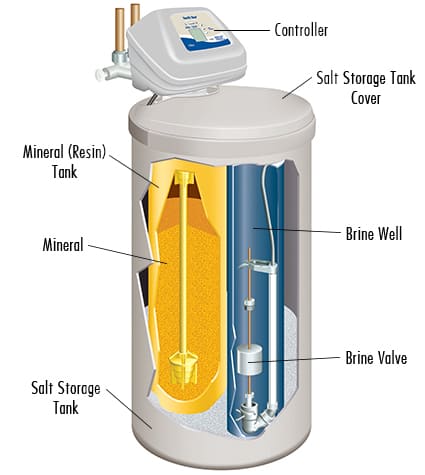
Resin beads: Resin beads are tiny little beads that hard minerals bind to. There’s thousands of them located inside of your water softener tank.
Ion exchange: Ion exchange happens when hard water passes through the charged resin beads which then remove the hard minerals from the water, allowing soft water to then enter your home’s pipes for use! When this exchange takes place calcium and magnesium ions are replaced with sodium ions that are attached to the sodium resin beads.
Brine: A strong concentration of sodium chloride.
The Regeneration Process
Backwash: When the backwash occurs, water flows up and out through the resin and flushes out all the built up sediment and broken resin beads into the drain.
Brine Draw: Brine solution sits on top of the resin bed and contains sodium chloride ions which replaces the calcium and magnesium ions on the resin beads.
Resin Bed Rinse: The resin bed is rinsed with clean water.
Rinse: Fresh water rinses the brine from the resin bed.
Once the rinse is finished, the regeneration process is complete and the resin bed is ready to collect hard water minerals and renew the water again.
Water Softener Regeneration Timing
So, you’re probably wondering: how long is this process going to take? This process typically takes two hours from start to finish. North Star Water Softener systems are programmed to recharge at 2am. This time is often associated with low water usage, making it an ideal time to recharge. It works while you sleep so you can wake up and use all the soft water that you need!
The frequency of regeneration will vary depending on the size of your home and your overall water usage. Two to three times per week would be considered standard. If you’re noticing that your water softener is regenerating too frequently, you may want to try cutting back on your water usage or consider opting for a larger water softener system.
Water and Salt Usage
Water and Salt usage will vary depending on overall water usage. However, you can generally expect this process to use:
Approximately 40 gallons of water to complete the process
Between 2.5 and 7 pounds of salt per regeneration
Reliance is the Reliable Choice
So, now that you understand exactly what happens during the water regeneration process, you may have some additional thoughts or questions…and that’s perfectly normal! Our service technicians would be more than happy to answer any questions that you may have!
Have concerns about your Reliance water softener system? Schedule an appointment and have one of our technicians service your system free of charge!
Our team is just one quick phone call away! Connect with us and let us take care of all your water softener needs!
Although it’s often overlooked, your water heater plays a prominent role in the overall function of your home and contributes to many facets of everyday life. From your sparkling clean dishes to that much-earned soak after a long day at the office, hot water helps make it all possible.
However, after years of use 365 days out of the year, your water heater can show visible signs of age, which then begs the question: how do you know when to replace your water heater? Today, we’ll provide you with some helpful tips that’ll help you decide if it’s time for an upgrade!
How Long Do They Last
Typically, a water heater will last you anywhere from 8-12 years depending on if you’ve been keeping up with proper maintenance and routine service. If you’ve neglected maintenance and service you could be looking at roughly 6-10 years of efficient use.
2 Tell-Tale Replacement Signs
There are a couple of indicators or tell-tale signs that indicate you may be ready for a new water heater. We’ll break them down so you know what to look out for.
Lukewarm Water
The first and often most noticeable indicator that it may be time to replace your water heater is if your supposed hot water is constantly running warm to lukewarm. You cranked the water what seems like all the way past the H and you’re still getting the water that runs warm rather than hot. This could be happening as a result of a broken heating element in your tank or a tank that is too small for your home and your hot water needs.
A Corroded Tank
In the case of a corroded tank, the initial sign is rusty water coming out of your faucets. Over time minerals break down a heater’s steel interior, resulting in built-up debris and rust forming within the tank. This rust is then released into the tank and as a result, travels out of your faucets leaving you with rusty unusable water.
Old Age
Old age, it happens to the best of us…even your water heater. After years of use, your water heater naturally becomes less reliable and efficient. Thankfully, there’s a serial number on the back that can help us identify exactly what year and month your water heater was manufactured in, giving our service technicians an idea about whether it’s time for a replacement or if service is a sufficient resolution to the problem at hand.
Make Your Move
Now you might be thinking, “Well I’ve had my water heater for upwards of 12 years and haven’t experienced any issues, do I still need to have it replaced?” That’s a great question! Given that every home has different hot water needs and usage frequencies, some tanks may last longer than others! If you’re thinking you may be due for a new water heater but have some thoughts or hesitations, give us a call! We’ll come out to inspect your current unit and then provide a recommendation as to if you should go ahead with a replacement or if it’s got another year or two of life left!
Save Money In the Long Run
Whether you’ve noted some tell-tale signs that it’s time for a replacement or if you’ve just got a feeling that your unit may be reaching maturity, looking into it by reaching out Reliance Heath should be your next natural step.
Our team is just one quick phone call away! Connect with us and let us take care of all your hot water needs!
Today, we break down how to adjust your water heater temperature. Whether it’s too hot or not hot enough, we provide some tips and tricks to ensure the perfect water temperature!
Your Water Temperature is Too Hot
A hot shower after a long day is such a treat! However, there’s nothing worse than scolding hot temperatures coming from every shower head and faucet in your house. If you’re experiencing ongoing exceedingly hot water, it may be an indication that your water temperature is set too high. For the health and safety of you and your family, it’s important that your water heater temperature is not set above 140 F or 78 C. The higher that your water temperature is set the less time that it takes for serious burns to occur.
See the Time and Temperature to Produce a Scald below.
Temperature
Time to Produce Serious Harm
120℉
More than 5 minutes
125℉
1 ½ to 2 minutes
130℉
About 30 seconds
135℉
About 10 seconds
140℉
Less than 5 seconds
145℉
Less than 3 seconds
150℉
About 1 ½ seconds
155℉
About 1 second
Decreasing Your Water Temperature
Depending on which style of Bradford White water heater you have, your access to your water heater may vary. After unscrewing the bottom access panel, you should be able to easily remove the panel and see the thermostat. The halfway point between A and B is roughly 140 F, therefore the nob shouldn’t exceed anywhere past that point. To decrease the temperature, use a screwdriver to turn the thermostat slightly to the right.
Increasing Your Water Temperature
Conversely, you may be finding that the temperature of your water is not hot enough. You may be experiencing low water temperatures for a sustained period of time. No one likes a freezing cold shower! This could be due to a number of contributing factors such as inefficient elements, tank size, and an increase in hot water usage.
However, that’s not to say that’s always the case. Adjusting your water heater temperature may actually be the best solution. To increase the temperature, remove the panel to the thermostat and adjust the nob, ensuring that you do not surpass the mid-A-B point or 140 F. Over the next couple of days be cognizant of the water temperature and if it has noticeably changed. Was your last shower just the perfect temperature or was it still feeling a bit too mild for your liking? If you don’t notice a difference, there may be another issue going on. Give us a call and we’ll come down to assess the situation and provide you with some insight and recommendations moving forward.
The Perfect Temperature
At Reliance Heath, we trust Bradford White water heaters. When you rent a Bradford White water heater from Reliance Heath, our annual rental fee includes routine maintenance free of charge. Live with peace of mind knowing that if your water is too hot or too cold, or anything in between, you can call us and we’ll be out as soon as possible!
Our experienced and trusted experts are just one quick phone call away! Schedule an appointment today and let us take care of all your water needs!